


What makes thousands of skilled professionals choose Australia every year? Is it the strong economy, the high-paying careers, or the opportunity to secure permanent residency? The answer is all of the above. With growing demand across key industries, abundant Australia job opportunities, and well-established Australia skilled migration pathways, Australia continues to attract talent from around the world. For those seeking career advancement and a clear route to Australia PR, the country offers opportunities that few destinations can match. Let’s dive in to know how you can make it.
Table of Content
- What Makes Australia’s Job Market Attractive for Skilled Migrants?
- High-Demand Jobs in Australia for International Workers
- Attractive Salaries and Employee Benefits in Australia
- Easy Pathways to Permanent Residency (PR)
- Australia’s Excellent Work-Life Balance
- Australia Offers Opportunities for International Students
- Why Skilled Migrants Prefer Australia Over Other Countries
- How to Find Jobs in Australia From Abroad
- Future Job Market Trends in Australia
- Conclusion
- FAQs
What Makes Australia’s Job Market Attractive for Skilled Migrants?
Australia’s job market is highly attractive to skilled migrants because it combines consistent demand for qualified professionals with strong wages, worker protections, and clear pathways to permanent residency. Key sectors like healthcare, engineering, IT, construction, and trades regularly report skills shortages, which are supported by Australia’s skilled occupation lists and employer-sponsored visa programs that prioritize in-demand roles. Employers often offer competitive salaries and benefits, while labor laws and a well-regulated employment system protect workers’ rights and workplace standards. Additionally, robust regional job markets, high-quality training and upskilling opportunities, and the option to transition from temporary work visas to permanent residency make Australia a practical and appealing choice for international job seekers aiming for long-term career growth and stability.
1. High-Demand Jobs in Australia for International Workers
Healthcare & Aged Care
- Registered Nurses
- Aged Care Workers
- Physiotherapists
- Medical Practitioners (General & Specialists)
Technology & IT
- Software Developers/Engineers
- Cybersecurity Analysts
- Data Scientists
- IT Systems Administrators
Engineering & Resources
- Civil Engineers
- Mining Engineers
- Electrical Engineers
- Mechanical Engineers
Construction & Skilled Trades
- Electricians
- Plumbers
- Carpenters
- Construction Project Managers
Education
- Teachers (Mathematics, Science, Special Education)
- Early Childhood Educators
Finance & Accounting
- Accountants
- Financial Analysts
- Auditors
Hospitality & Food Services
- Chefs
- Cooks
Social Services
- Social Workers
- Community Workers
Healthcare, engineering, technology, and skilled trades are projected to remain the most in-demand sectors for the next 5–10 years.
2. Attractive Salaries and Employee Benefits in Australia
| Industry | Average Salary (AUD/year) | Demand Level | PR Opportunities |
| Healthcare & Nursing | $65,000 – $120,000+ | Critical | Very High – (Subclass 189, 190, Priority 2 processing) |
| IT & Technology | $104,000 – $154,000 | Very High | Very High – (Subclass 189, 190, 186) |
| Data Science & Analytics | $120,000 – $190,000 | Very High | Very High – Subclass 189/190 (strong VIC/NSW preference) |
| Civil Engineering | $85,000 – $130,000 | High | High – (Subclass 189, 190, 491) |
| Electrical Engineering | $90,000 – $140,000 | Critical | High – (Subclass 189, 190) |
| Trades (Electricians, Plumbers, Carpenters) | $90,000 – $130,000 | Critical | High – (Subclass 491 regional, 186 employer-sponsored) |
| Education & Teaching (STEM, Secondary) | $65,000 – $100,000 | High | Medium–High – (Subclass 190, 491) |
| Aged Care | $50,000 – $75,000 | High | Medium – (Subclass 190, 491 regional) |
| Construction & Project Management | $110,000 – $150,000 | High | High – Subclass 186, 189 |
| Finance & Accounting | $70,000 – $105,000 | High | High – (Subclass 189, 190, 186) |
| Mining & Resources Engineering | $120,000 – $160,000 | High | High – (Subclass 189, 190, 491) |
| Cybersecurity/b> | $95,000 – $135,000 | Very High | Very High – (Subclass 189, 190, 186) |
| Social & Community Services | $65,000 – $90,000 | High | Medium–High – Subclass 190, 491 |
3. Easy Pathways to Permanent Residency (PR)
| Pathway | Visa Type | Key Requirements | PR Pathway | Best For |
| Skilled Independent Visa | Subclass 189 points-tested permanent visa | Age <45, 65+ points, competent English, positive skills assessment, occupation on MLTSSL, no state/employer sponsorship needed | Direct PR (lives anywhere in Australia) | High-scorers who want full flexibility, no state tie |
| Skilled Nominated Visa | Subclass 190 points-tested permanent visa | Age <45, 65+ points, competent English, skills assessment, occupation on SOL, state/territory nomination (earns +5 bonus points) | Direct PR (must live in nominating state for ~2 years) | Those scoring below 189 threshold who can meet state requirements |
| Employer Sponsored Visa | Subclass 186 (ENS) permanent, Subclass 482 (SID) temporary | Valid job offer from Australian employer, skills assessment, relevant English, occupation on eligible list | ENS 186 = Direct PR; SID 482 → PR after 3 years (pathway to 186) | Workers with an Australian job offer, no points test needed |
| Regional Migration Programs | Subclass 491 (Skilled Work Regional) provisional visa | Age <45, 65+ points, skills assessment, occupation on relevant list, state/regional nomination or family sponsorship (+15 bonus points) | Temporary (5 years) → PR via Subclass 191 after 3 years in regional area | Lower-scorers, regional occupation holders, those willing to live outside major cities |
4. Australia’s Excellent Work-Life Balance
Flexible Work Culture
Australia leads the world in promoting flexible work arrangements. Employees can request flexible working hours, remote work, or part-time schedules after 12 months of employment. Many employers actively support this culture, with over 40% of Australian workers enjoying flexible arrangements. The standard 38-hour workweek is shorter than in many developed countries, and overtime is compensated at higher rates.
Employee Rights
Australian workers benefit from strong legal protections under the National Employment Standards (NES). Full-time employees receive 4 weeks of paid annual leave, 10 days of paid personal/carer leave, and 12 months of unpaid parental leave. The Fair Work Commission ensures employers meet obligations, and Australia has the highest minimum wage globally (AUD $24.10/hour as of 2025), protecting workers from exploitation.
Family-Friendly Environment
Australia offers excellent support for families, including 18 weeks of paid parental leave under the national scheme, accessible childcare services, and flexible schooling options. Paid sick leave and carer’s leave are available without risking employment, making it easier for parents to balance work and family responsibilities.
Safe and Clean Cities
Australian cities consistently rank among the world’s safest and most livable. Low crime rates, clean public spaces, and excellent healthcare infrastructure make cities like Sydney, Melbourne, Perth, and Brisbane ideal for settling down. Melbourne and Sydney frequently top global livability indexes, while Perth and Brisbane offer lower costs of living with similar quality.
Multicultural Society
Australia is one of the most culturally diverse nations on Earth, with nearly 30% of residents born overseas. Major cities like Sydney and Melbourne have vibrant multicultural communities, offering diverse food, festivals, and cultural events. This diversity creates an inclusive environment where international workers feel welcomed and can easily integrate.
Popular Cities for International Workers
| City | Key Features | Why It’s Popular |
| Sydney | Financial hub, beaches, global corporate headquarters | Highest job opportunities, world-class infrastructure, iconic lifestyle |
| Melbourne | Culture, arts, coffee, education hub | Best for creative industries, top universities, diverse food scene |
| Perth | Mining, resources, lower cost of living | Strong in engineering/mining, quieter lifestyle, proximity to Asia |
| Brisbane | Tech growth, warm climate, affordable | Rising tech sector, family-friendly, lower housing costs than Sydney/Melbourne |
5. Australia Offers Opportunities for International Students
Post-Study Work Permits
- Temporary Graduate Visa (Subclass 485) allows graduates to stay and work in Australia for 2–4 years after completing their degree.
- Diploma/trade graduates: up to 18 months stay; Bachelor degree graduates: up to 2 years; Master/PhD graduates: up to 3–4 years.
- Regional area graduates can stay up to 6 years under the new post-study work stream.
Part-Time Job Opportunities
- Students can work 48 hours per fortnight during study periods and unlimited hours during breaks.
- Popular sectors: retail, cafes/restaurants, hospitality, tutoring, administration, and farming.
- Part-time wages: AUD $20–$25/hour (₹1,100–$1,400/hour), helping students cover living expenses.
Transition from Student Visa to PR
- Pathway: Student Visa (500) → Graduate Visa (485) → PR via skilled migration (189, 190, or 491).
- Complete a 2-year degree in a skilled occupation (nursing, IT, engineering).
- Get a skills assessment, submit an Expression of Interest (EOI) to SkillSelect, then receive PR invitation.
- Regional graduates have lower points thresholds and faster PR processing.
Scholarships and Career Growth
- Wide range of university scholarships, grants, and bursaries available for international students.
- Some universities offer 100% tuition funding or up to $30,000/year for engineering and other majors.
- Australian degrees are globally recognized, opening doors to international career opportunities.
- Post-study work experience enhances career prospects and points for PR applications.
Why Skilled Migrants Prefer Australia Over Other Countries
- Strong demand for skilled professionals.
- Competitive Salaries.
- Flexible work culture and work-life balance.
- Strong employee rights and workplace protections.
- Family-friendly environment.
- Safe and clean cities.
- Multicultural and welcoming society.
- High quality of life.
- World-class healthcare system.
- Excellent education opportunities.
- Pathways to permanent residency and citizenship.
- Pleasant Climate and Outdoor Lifestyle.
How to Find Jobs in Australia From Abroad
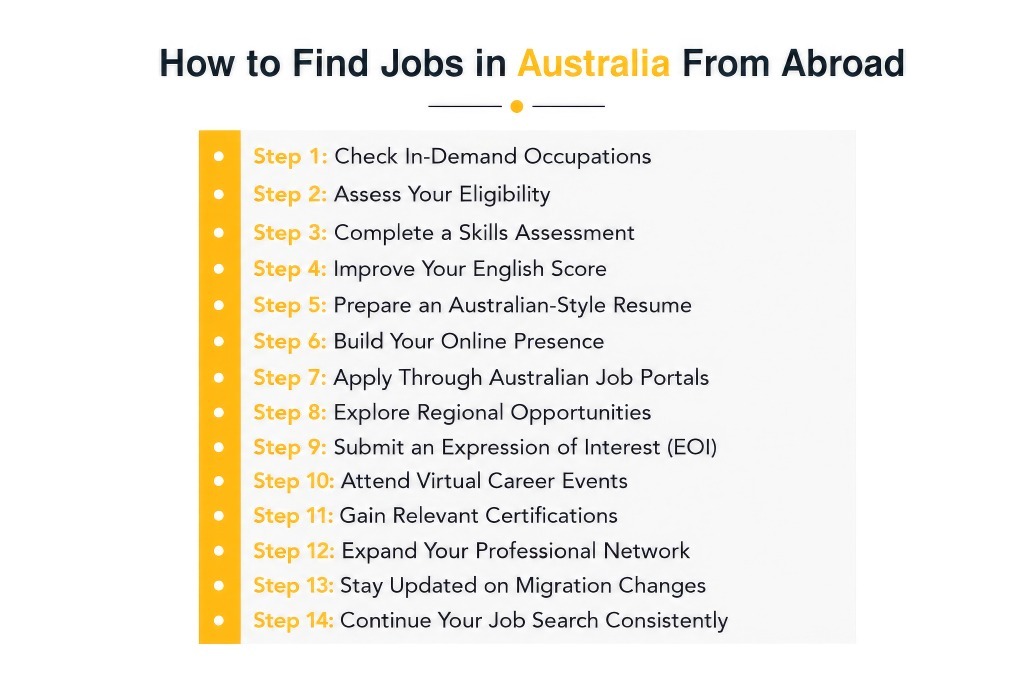
Step 1: Check In-Demand Occupations
Research whether your profession is currently needed in Australia and identify the industries with strong hiring demand.
Step 2: Assess Your Eligibility
Review the requirements for skilled migration pathways, including age, qualifications, work experience, and English proficiency.
Step 3: Complete a Skills Assessment
Have your qualifications and work experience evaluated by the relevant Australian assessing authority for your occupation.
Step 4: Improve Your English Score
Take an approved English language test and aim for a competitive score to strengthen your profile.
Step 5: Prepare an Australian-Style Resume
Create a professional resume that aligns with Australian employer expectations and highlights relevant achievements.
Step 6: Build Your Online Presence
Update your LinkedIn profile and showcase your skills, certifications, and professional experience.
Step 7: Apply Through Australian Job Portals
Actively search and apply for suitable vacancies on job boards, company career pages, and recruitment platforms.
Step 8: Explore Regional Opportunities
Consider jobs in regional areas where skill shortages may create additional opportunities for migrants.
Step 9: Submit an Expression of Interest (EOI)
If pursuing skilled migration, lodge an EOI to express your interest in being invited to apply for a visa.
Step 10: Attend Virtual Career Events
Participate in online job fairs, employer webinars, and networking sessions to connect with potential employers.
Step 11: Gain Relevant Certifications
Complete industry-recognized certifications or training that can improve your competitiveness in the Australian job market.
Step 12: Expand Your Professional Network
Connect with professionals already working in Australia and engage in industry groups and communities.
Step 13: Stay Updated on Migration Changes
Monitor occupation lists, visa updates, and labor market trends to align your plans with current opportunities.
Step 14: Continue Your Job Search Consistently
Keep applying, networking, and improving your profile while pursuing migration pathways that do not require a job offer.
Future Job Market Trends in Australia
1. Growing Demand for Healthcare Professionals
An aging population will continue to drive demand for nurses, aged care workers, and allied health professionals.
2. Expansion of Technology and AI Roles
Jobs in software development, cybersecurity, data analytics, cloud computing, and AI are expected to grow rapidly.
3. Continued Need for Engineers
Infrastructure projects and renewable energy investments will create opportunities across engineering disciplines.
4. Rise of Renewable Energy Careers
Australia’s transition to clean energy is increasing demand for professionals in solar, wind, and sustainability sectors.
5. Construction and Trade Skills Shortages
Skilled tradespeople and construction workers will remain essential as housing and infrastructure development continues.
6. Growth in Education and Childcare
Population growth and workforce participation are increasing the need for teachers and childcare professionals.
7. Increased Demand for Skilled Migrants
Australia is expected to continue relying on skilled migration to address workforce shortages across key industries.
8. Digital Skills Becoming Essential
Technology and digital literacy will become valuable across almost every profession, not just IT-related fields.
9. More Opportunities in Regional Australia
Regional areas are expected to offer growing employment opportunities due to targeted development and labor shortages.
10. Focus on Future-Ready Skills
Adaptability, problem-solving, communication, and technology skills will become increasingly important in the evolving job market.
Conclusion
Australia’s strong labor market, excellent quality of life, and structured migration programs make it a leading destination for skilled professionals. Whether your goal is to access rewarding Australia job opportunities or obtain Australia PR, staying informed about current requirements and pathways is essential. For official information and updates, refer to the Australian Government Department of Home Affairs.
Frequently Asked Questions
Nurses, Accountants, Teachers, Engineers, Software Developers, Electricians, Plumbers, Aged Care Workers, Chefs, Project Managers.
Subclass 186: Direct PR with employer sponsorship.
Subclass 482, 186: Work 2 years, then PR.
Subclass 189/190/491: 65+ points via SkillSelect.
Yes. Via Subclass 189 (independent), 190 (state), 491 (regional), or 186 (employer-sponsored).
Median: AUD $65,000/year
Full-time average: AUD $90,000–$100,000/year
Minimum: AUD $24.10/hour
Yes. Minimum IELTS 6.0 for skilled visas (189/190/491/482).
Sydney (financial hub), then Melbourne, Brisbane, Perth.
Higher wages, faster direct PR (189/190), stronger demand, 38-hour workweek, English-speaking, higher salaries.





 WHATSAPP