


Why Nurses Are in High Demand in Canada
The healthcare system in Canada is publicly funded and relies heavily on nurses across hospitals, clinics, and community care. With rising healthcare needs and an aging population, the demand for nurses continues to grow.
This is why Canada has become a top destination for international nurses, especially from the UAE, offering strong career opportunities, stability, and long-term settlement pathways. Nursing jobs in Canada continue to expand across provinces due to this sustained demand.
The demand is real, and opportunities are open for qualified nurses. Let’s dive in.
Table of Content
- What Is Driving the Demand for Nurses in Canada?
- Nurse Shortage Statistics in Canada (2025–2030 Outlook)
- Why Canada Is Actively Hiring International Nurses?
- Top Provinces in Canada with Highest Demand for Nurses
- Types of Nursing Jobs in Demand in Canada
- Eligibility Requirements for Nurses to Work in Canada
- Salary of Nurses in Canada (Province-Wise Breakdown)
- Benefits of Working as a Nurse in Canada
- Future Outlook for Nursing Jobs in Canada
- Frequently Asked Questions
What Is Driving the Demand for Nurses in Canada?
Aging population and increased healthcare needs
Canada’s growing 65+ population raises demand for geriatric, chronic‑disease and long‑term care. Older adults need more complex, continuous nursing support across hospitals, home care and community settings, creating steady openings for RNs and nurse practitioners.
Post‑pandemic healthcare workforce shortage
COVID‑19 worsened burnout and early retirements, leaving high vacancy rates and increased reliance on overtime and international hires. The result: ongoing demand for frontline, critical‑care and infection‑control nurses.
Expansion of healthcare infrastructure
Federal and provincial investments to expand long‑term care, mental‑health services and community clinics are creating new staffed roles. Targeted recruitment programs for rural and Indigenous communities further increase nursing vacancies nationwide.
Nurse Shortage Statistics in Canada (2025–2030 Outlook)
Canada’s Job Bank classifies registered nurses and registered psychiatric nurses as having a strong risk of labour shortage nationally over the 2024–2033 period. That makes nursing one of the clearest in-demand occupations in Canada for the 2025–2030 outlook, creating strong nurse job opportunities in Canada.
Current shortage numbers
Job Bank does not publish a single “total shortage number” for all nurses, but it does clearly state that this occupation faces a strong national shortage risk. For the Toronto region, Job Bank says the employment outlook for registered nurses and registered psychiatric nurses is very good for 2024–2026, supported by employment growth, limited retirements, and a small number of unemployed workers with recent experience in the occupation. For Alberta, Job Bank similarly notes that Alberta’s growing population and a national shortage are contributing to demand for nurses.
Projected job openings
Job Bank’s national outlook shows that nursing demand remains strong because of both growth and replacement needs. In regional outlooks, Job Bank says the Toronto region will see moderate new positions created by employment growth and relatively few openings from retirements, which still keeps the outlook very good. This supports the broader conclusion that nurse job opportunities should stay strong through 2030.
Provinces with highest demand
Job Bank highlights strong demand in Ontario through the Toronto region outlook, where registered and registered psychiatric nursing jobs in Canada continue to expand across provinces due to this sustained demand. have a very good employment outlook for 2024–2026. In Alberta, Job Bank says demand is being pushed up by population growth and a national shortage. Job Bank’s national outlook also confirms that the occupation remains in shortage across Canada, which supports continued demand in British Columbia as well.
Why Canada Is Actively Hiring International Nurses
Here’s why Canada is actively hiring international nurses and why it has become a strong destination for a nursing career in Canada.
- Immigration-friendly policies.
- Fast-track pathways for healthcare workers.
- Attractive salary and benefits.
- Strong demand caused by ongoing nurse shortages.
- Better job prospects in provinces like Ontario, British Columbia, and Alberta.
- Support for international recruitment to fill immediate staffing gaps.
- Long-term demand driven by an aging population and healthcare needs.
- Stable career growth and opportunities for permanent settlement.
Top Provinces in Canada with Highest Demand for Nurses
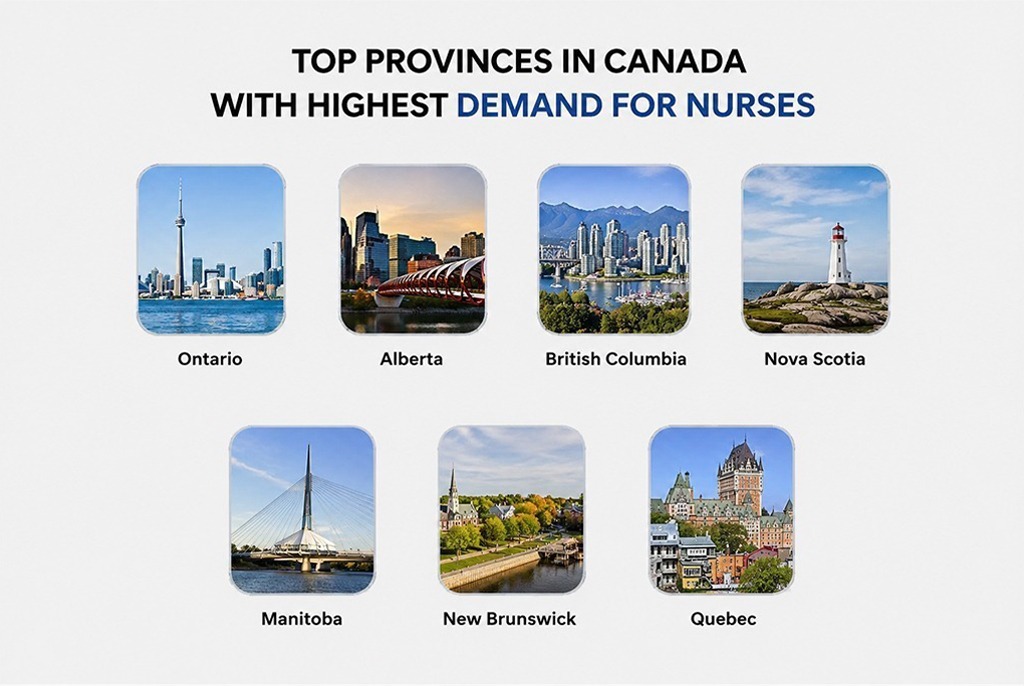
Here is the list of the best provinces for nurses in Canada, where demand for nursing jobs in Canada is currently highest and opportunities continue to grow across the healthcare system.
- Ontario.
- Alberta.
- British Columbia.
- Nova Scotia.
- Manitoba.
- New Brunswick.
- Quebec.
Types of Nursing Jobs in Demand in Canada
These are the main types of Nursing jobs in Canada.
- Registered Nurses (RNs).
- Registered Psychiatric Nurses.
- Nurse Practitioners (NPs).
- Licensed Practical Nurses / Registered Practical Nurses (LPNs / RPNs).
- ICU nurses.
- Emergency room nurses.
- Pediatrics nurses.
- Community health nurses.
- Long-term care and home care nurses.
Eligibility Requirements for Nurses to Work in Canada
Here are the key eligibility requirements for nurses to work in Canada, essential for anyone exploring Healthcare jobs in Canada and planning to build a career in the Canadian healthcare system.
- Educational Qualifications
Nursing education must be comparable to Canadian standards and verified through a recognized credential assessment agency. - Licensing Requirements
Registration with the provincial nursing regulatory body is mandatory. This may include document verification, exams, and bridging programs if required. - Language Requirements
Proof of English or French proficiency through approved tests such as IELTS, CELBAN, or PTE, as specified by the regulator. - Work Experience
Relevant nursing experience is usually required. Experience must align with the Canadian nursing role applied for. - NOC Classification
The job role must match the appropriate National Occupational Classification code for nurses. - Immigration Eligibility
Separate eligibility under work permit or permanent residence pathways is required, based on factors such as age, education, language scores, and experience. - Health and Character Requirements
Medical examinations and police clearance certificates are part of the application process.
Salary of Nurses in Canada (Province-Wise Breakdown)
Nursing salaries in Canada vary by province, experience level, and demand in the healthcare system. Below is a general hourly wage overview to help understand the typical earning range across regions.
| Province / Region | Entry-Level Hourly Wage (Approx) | Experienced Hourly Wage (Approx) |
| Alberta | CAD 30 – 40 | CAD 50 – 54+ |
| British Columbia | CAD 35 – 40 | CAD 50 – 57 |
| Ontario | CAD 29 – 38 | CAD 45 – 55 |
| Quebec | CAD 27 – 35 | CAD 40 – 50 |
| Manitoba | CAD 34 – 40 | CAD 45 – 52 |
| Saskatchewan | CAD 38 – 42 | CAD 48 – 52 |
| New Brunswick | CAD 31 – 36 | CAD 42 – 49 |
| Nova Scotia | CAD 30 – 35 | CAD 42 – 50 |
| Newfoundland and Labrador | CAD 33 – 38 | CAD 45 – 52 |
| Prince Edward Island | CAD 31 – 36 | CAD 42 – 50 |
| Yukon | CAD 33 – 40 | CAD 50 – 60 |
| Northwest Territories | CAD 45 – 55 | CAD 60 – 70+ |
| Manitoba | CAD 34 – 40 | CAD 45 – 52 |
| Nunavut | CAD 45 – 55 | CAD 65 – 71+ |
Wage ranges may vary depending on employer, experience, and location. For the most updated and official figures, always refer to the latest data on Job Bank Canada.
Benefits of Working as a Nurse in Canada
Nursing jobs in Canada is one of the most stable and in-demand professions in Canada, offering strong career growth and long-term settlement opportunities.
- Job Security
High demand for nurses across hospitals, clinics, and long-term care facilities ensures stable employment opportunities. - Work-Life Balance
Structured shifts, regulated working hours, and paid leave policies help maintain a balanced professional and personal life. - Permanent Residency Opportunities
Nurses are prioritized under multiple immigration pathways such as Express Entry and Provincial Nominee Programs, making PR more accessible. - Family Sponsorship Options
Eligible nurses can sponsor their spouse and dependent children to join them in Canada. - Career Growth & Specialization
Opportunities to move into specialized roles such as critical care, emergency, or community nursing with higher pay scales. - Social Benefits & Healthcare Coverage
Access to public healthcare and employee benefits provided through provincial systems and employers.
Future Outlook for Nursing Jobs in Canada
Nursing jobs in Canada outlook remains very strong through 2030, with the federal job outlook for registered nurses showing a strong risk of labour shortage nationwide over 2024–2033. Job Bank also says the occupation’s employment is expected to stay relatively stable, with a moderate number of openings from retirements and a limited number of new entrants, which keeps demand high.
Future outlook points
- Strong national shortage risk through 2024–2033.
- Employment expected to remain relatively stable.
- Openings will continue from retirements.
- Demand stays high because the supply of new nurses is limited.
- Nursing remains one of Canada’s most in-demand healthcare occupations.
- Regional demand is still very good in major labour markets such as Toronto.
- Alberta also continues to show strong demand, supported by population growth.
- Internationally educated nurses will keep playing an important role in filling gaps.
Frequently Asked Questions
Canada has a severe nurse shortage due to an aging population and growing healthcare needs.
Ontario, British Columbia, and Alberta offer the most nursing jobs and competitive pay.
On average, nurses in Canada earn around CAD 40 to 50 per hour, with entry-level nurses at ~CAD 32–38/hr and experienced nurses reaching ~CAD 50–56+/hr depending on province and experience.
Yes, IELTS Academic (minimum 6.0 overall) or CELBAN is required for most internationally trained nurses.
It takes about 12–24 months for internationally trained nurses to get licensed.
Yes, nurses can bring spouses and children through work permits or permanent residence.
Nurses typically need 450+ CRS points, though healthcare-specific draws sometimes accept lower scores.
Total costs range from CAD 2,500–4,500 for assessments, licensing, exams, and visa fees.





 WHATSAPP