GET FREE CONSULTATION

Archives: News

Canada the most favorite destination for global tech companies, says report

Major global tech companies are keen to expand their presence to Canada, says the Scoring Canadian Tech Talent report by CBRE for 2019. Canada is attracting both tech talent and companies at record rates according to this report that ranked Canadian cities on the basis of competitive advantages and appeals to tech workers and employers.

Canadian cities have emerged as attractive destinations for both global and domestic tech companies. The Canadian city of Toronto alone added 80,100 new tech jobs during the five years between 2013 and 2018. At the same time, the total number of new tech jobs added in the entire country during the same period was 161700.

Many major global tech companies, especially the top US tech firms, find Canada as their first choice for expanding their presence. They intentionally choose to expand in Canada over other US cities. One of the major factors that make Canada attractive for these tech companies is the abundant availability of tech talent. Canada is now an abundant source of high-quality tech talent with deep pools of tech labour in Canadian cities and accommodative immigration policies. Moreover, Canadian universities produce highly educated tech workers including those specialized in tech fields such as AI research and multimedia production. Canada also facilitates substantial cost savings for global tech companies with high-quality tech talent available at a less prohibitive cost, when accounting for the discounted Canadian dollar compared to US dollars.

CBRE Research analyzed 20 leading cities of Canada and ranked their tech talent offering on the basis of 13 metrics. According to the Report, the top Canadian tech talent markets in 2019 are Toronto, Ottawa, Vancouver, Waterloo Region and Montreal. The report says that these cities have the perfect settings for the tech talent companies to flourish, especially high concentration of tech talent.

Top 20 cities in Canada for tech talent:

  1. Toronto, Ontario
  2. Ottawa, Ontario
  3. Vancouver, British Columbia
  4. Waterloo, Ontario
  5. Montreal, Quebec
  6. Calgary, Alberta
  7. Victoria, British Columbia
  8. Quebec City, Quebec
  9. Hamilton, Ontario
  10. Edmonton, Alberta
  11. Halifax, Nova Scotia
  12. Oshawa, Ontario
  13. Guelph, Ontario
  14. London, Ontario
  15. Regina, Saskatchewan
  16. Winnipeg, Manitoba
  17. St John’s, Newfoundland and Labrador
  18. Windsor, Ontario
  19. Saskatoon, Saskatchewan
  20. Moncton, Manitoba

Do you wish to explore the abundant career opportunities that await you in Canada? Get the help of expert Canada immigration consultants of CanApprove to explore your options for moving to Canada permanently.


Migrants’ contributions crucial for Australian economy’s growth, shows latest data

Migrants are making significant contributions to the growth of Australia’s economy, shows new data released by the Australian Bureau of Statistics(ABS). As per the data, median employee income of migrant taxpayers has increased from $49,438 in 2016-17 to $49,412 in the current financial year. Last year, the median employee income of skilled migrants was $59,304, which is much higher than the median income of all Australians. The median employee income of humanitarian migrants was $32,792 during the same period, according to the data.

All these bring to light the fact that the contribution of the migrants for the healthy growth of the Australian economy has been very crucial. The data further bust the myth that migrants are a drain on the country’s economy and government services.

The fact that migrants are earning a higher median income compared to all Australians can be interpreted as migrants are paying more taxes compared to others. Thus they strengthen the economy as the taxes they pay are used by the government to fund hospitals, schools and other public services.

Australia has recently introduced the Global Talent Independent program through which it plans to recruit 5000 high-skilled migrants. The program was launched by Australia with an aim to support the growth of the country’s knowledge economy. Australia has announced extending the post-study work visa rights to international students in the regional campuses of the country. The move aims to retain global talents for the benefit of the country’s economy. As part of efforts in this direction, Australia is also making the Global Talent Employer Sponsored program permanent.

Australia has recently adopted several important steps for promoting  migration to the regional areas of the country. The country has plans to increase the number of visas to skilled workers who are willing to migrate to the country’s regions. Those immigrants who are willing to live in regions outside of Melbourne, Sydney and Brisbane will enjoy priority processing of their applications. Further, international university graduates who reside in these locations will be able to apply for more time in Australia on a post-study work visa.

Do you wish to migrate to Australia? Then start the process now!Contact our expert Australia immigration consultants for a smooth and hassle-free Australia migration.

Quebec values test for immigration applicants from January 1, 2020

From January 1, 2020 onwards, the new immigrants to Quebec will have to attend a Quebec values test to prove that they have enough knowledge about the distinct values of the province. The new immigrants have to appear for the test within two years before applying for permanent residence, according to Gazette of Quebec, the official publication of the Quebec government.

According to Quebec Premier François Legault, the test will not be much different from the one that already exists in Canada about knowing Canada. By introducing the Quebec values test, the province aims to ensure that those immigrants who wish to live there have good knowledge of the values of Quebec.

The test will include 20 multiple choice and true or false questions. An example of the questions given by Immigration Minister Simon Jolin-Barrette goes like this: “Since March 27, 2019, Bill 21, the secularism of the state, says every new police officer cannot wear religious symbols on the job. True or false?” The questions will be related to various topics such as Quebec democracy, francophone culture, secularism, rights and responsibilities and equality between men and women. The test has to be completed within 90 minutes and the candidate has to score at least 75 percent marks to qualify.

The candidates who pass the Quebec values test and meet other eligibility criteria will obtain a Quebec Selection Certificate with which they may apply for permanent residence in Canada. Children and applicants with a medical condition that prevents them from taking the test need not attend the Quebec values test.

The immigration candidates have a choice to either attend the test directly or enroll in a course pertaining to the values of Quebec, prescribed by the minister, before attending the test. If the candidate fails in the test, they have an option to reappear for the same after two weeks. But if they fail in the test again, they may enroll for the course before appearing for the test for a third time. If the candidate fails once again, they will have to resubmit the immigration application from the scratch.

Quebec offers promising career opportunities and high standards of living to the qualified immigrants who wish to settle in the province. Explore your options to move to Quebec permanently by contacting our expert Quebec immigration consultants!

460 Express Entry, Occupations In-Demand candidates invited in November 28 Saskatchewan draw

The Saskatchewan Immigrant Nominee Program (SINP) draw held on November 28 invited 460 Express Entry and Occupations In-Demand candidates to apply for a provincial nomination. While 200 invitations out of these were issued to candidates belonging to the Express Entry subcategory, the remaining 260 invitations went to Occupations In-Demand category candidates.

Saskatchewan Express Entry

The invited candidates under the Saskatchewan Express Entry sub-category, if successfully apply for and obtain a provincial nomination, will receive 600 Comprehensive Ranking System (CRS) score points. This would guarantee them an invitation to apply for permanent residence in Canada in the subsequent Express Entry draw.

Saskatchewan Occupations In-Demand

Those who do not have an Express Entry profile may apply for a provincial nomination from Saskatchewan through the Occupations In-Demand subcategory. Though a candidate does not require a job offer to be eligible under Express Entry or Occupations In-Demand subcategories, they must have at least one year of work experience in an eligible skilled occupation related to their field of study and meet other major criteria.

Saskatchewan Expression of Interest

The first step to be invited to apply for provincial nomination under either the Express Entry or the Occupations In-Demand subcategory is to create an Expression of Interest profile with the SINP. Each profile is assessed and awarded a score out of 100 based on various eligibility factors such as age, education, skilled work experience etc. The highest scoring candidates are invited to apply for a provincial nomination through the SINP Expression of Interest draws that are conducted regularly. In the November 28 draw, candidates in both the Express Entry and the Occupations In-Demand sub-categories were required to score at least 69 points to qualify. Besides, the candidates had to have their educational credential assessments done for degrees and diplomas obtained outside of Canada.

The SINP has conducted 15 draws and invited 5689 candidates since the province replaced its the limited In-Demand Occupations List with an Excluded Occupations List. This move expanded the number of eligible occupations for both Express Entry and Occupations In-Demand sub-categories from 19 to more than 200. The following draws targeted candidates in a variety of eligible occupations. The November 28 draw invited candidates in 97 eligible occupations.

Canada PNP is a faster and simpler pathway for Canada migration. Contact our expert immigration consultants to explore your options for Canada migration through Provincial Nominee Programs.

Canada ranked the best country for immigration and investment in a recent study

The Anholt-Ipsos Nation Brands Index that ranked 50 countries on the basis of various quality factors has found Canada to be the best place for immigration and investment. Canada was also ranked third in overall ranking, while France and Germany emerged first and second, respectively.

The countries included in the study were ranked on the basis of 20,035 online interviews that involved participants above the age of 18 from 20 panel countries. Canada emerged the best in three out of six individual categories, which are immigration and investment, people and governance. Canada was also the only country among the top five to improve its place in governance, culture and tourism categories.

Canada is being ranked the best for immigration and investment for the second consecutive year. A number of factors have been taken into consideration for ranking countries under this category. These include the country’s power to attract people from around the world to live, work and study here, and also the quality of life and business environment in the country.

The score is awarded to each country for the immigration and investment factor based on five composite attributes–work and live, quality of life, educational qualifications, invest in business and equality in society.

The study asked the participants to attribute personality traits to the countries and 39 per cent found Canada to be friendly, while for 30 per cent Canada was trustworthy, for 29 percent happy and for 19 per cent, generous.

The study was conducted by GfK Social and Strategic Research, acquired by Ipsos on October 10, 2018. The data collected through online interviews with more than 20000 candidates from 20 panel countries was weighed on the basis of key demographic characteristics such as age , gender, and education of the 2018 online population in that country. The study also used race/ethnicity for sample balancing in the U.S., UK, South Africa, India, and Brazil. The field work was conducted during July 7-25, 2018. Fifty nations in North America, Europe, Asia Pacific, Latin America and the Caribbean and Middle East/Africa were measured in the study.

Canada immigration on mind?Don’t hesitate to start the process for making your dream come true because, there is no better country than Canada to immigrate to and build your future. The expert immigration consultants of CanApprove Immigration Consultancy are here to help you every step of the way in the immigration process.  Contact us now!

CRS cut-off score drops further in November 27 Express Entry draw

In the Express Entry draw held on November 27, the Immigration, Refugees and Citizenship Canada(IRCC) invited 3600 candidates to apply for permanent residence. The minimum Comprehensive Ranking System (CRS) for the invited candidates was 471 points. This is one point lower compared to the previous Express Entry draw held on November 13.

Tie-break rule was applied in the November 27 draw and the time stamp given was November 11, 2019 at 6:29:10 UTC. It means the draw prioritised eligible candidates who had submitted their Express Entry profiles before the said date and time.

Though the minimum CRS cut off score touched a record high in the October 30 Express Entry draw, it has been showing a decreasing trend in the subsequent draws. The CRS cut-off score in the October 30 draw was 475 points.

The cut-off score in the latest draw is still comparatively high at 472 and the longer gap occurred between two all-program Express Entry draws occurred in October is assumed to be the reason. When the gap between two all-program Express Entry draws is longer, more eligible profiles enter the Express Entry pool. As a result, the CRS cut-off score is set high by the IRCC to select the most eligible candidates. However, as Canada plans to admit a high number of immigrants through Express Entry, the CRS cut-off score is expected to come down further in the near future.

The Immigration Levels Plan of Canada for 2019-2021 envisages to admit around 25600 candidates through Express Entry during the three-year plan period. Another 200000 candidates will be admitted through Provincial Nominee Programs during this period.

Minimum CRS requirements in the Express Entry draws held this year:

Date  Minimum CRS score Number of ITAs issued
January 10, 2019 449 3900
January 23, 2019 443 3900
January 30, 2019 438 3350
February 20, 2019 457 3350
March 6. 2019 454 3350
March 20, 2019 452 3350
April 3, 2019 451 3350
April 17, 2019 451 3350
May 1, 2019 450 3350
May 15, 2019(Program-specific) 332   500
May 29, 2019 470 3350
June 12, 2019 465 3350
June 26,  2019 462 3350
July 10, 2019 460 3600
July 24, 2019 459 3600
August 12, 2019 466 3600
August 20, 2019 457 3600
September 4, 2019 463 3600
September 18, 2019 462 3600
October 2, 2019 464 3900
October 16, 2019 (Program-specific) 357  500
October 30, 2019 475 3900
November 14, 2019 472 3600
November 27, 2019 471 3600


Interested in Canada immigration through Express Entry? Contact us for more information and guidance

Tremendous rise recorded in Canada job vacancy rate in 3rd quarter of 2019

The job vacancy rate in the private sector of Canada witnessed a record high in the third quarter of 2019, revealed a report by the Canadian Federation of Independent Businesses (CFIB).

The latest Help Wanted Report released by the Federation shows that the number of unfilled job vacancies in Canada’s private sector was around 433000 during the third quarter of 2019. This number is 1500 more compared to the second quarter of 2019 and 15000 more compared to the third quarter of 2018.

For the past five consecutive quarters, Canada has been witnessing a record high in job vacancy rates. Especially the small firms in Canada with employee strength less than five have been finding it difficult to fill the vacancies.

Among the Canadian provinces, Quebec recorded the highest job vacancy rate at four per cent. Second came British Columbia with a job vacancy rate of 3.8 per cent. In the third place was Ontario with a national average of 3.2 per cent. Though the vacancy rates in the Prairie provinces and Newfoundland and Labrador were still below the national average, they were slightly up compared to previous quarters.

Rising job vacancy rates were reported in sectors such as agriculture, information and hospitality. The personal services industry that includes businesses such as hairdressers, dry cleaners and funeral services also had a high vacancy rate of 4.9 per cent during July-October 2019. Job vacancy rate in the construction industry during this period was 4.7 per cent.  At the same time,manufacturing, wholesale and retail sectors witnessed a decline in job vacancy rates. The other major sectors that witnessed an increase in job vacancy rates during this period were hospitality (4.0 per cent), agriculture (3.7 per cent) and information (2.4 per cent). The lowest job vacancy rate was recorded with the natural resources sector, at 1.8 per cent.

The CFIB report points out that the most significant factors which lead to an increase in the number of job vacancy rates are future outlooks, growth intentions, business size and firm-specific job characteristics.

Canada offers great opportunities for foreign skilled workers to build a great career. Explore your options to migrate to Canada by getting in touch with our expert immigration consultants.

148 candidates invited in the latest Alberta Express Entry draw!

In the Alberta Express Entry draw held on November 6, a total of 148 candidates were invited to apply for a provincial nomination. The invited candidates were required to have a minimum Comprehensive Ranking System(CRS) score of 400 to be invited, besides meeting other eligibility criteria.

These invited candidates, if successfully apply for and obtain provincial nomination from Alberta, will receive 600 additional CRS score points which would ensure them an invitation to apply for permanent residence in Canada in the subsequent Express Entry draw. The Alberta Express Entry stream allows the province to select candidates who are capable of contributing towards the growth of the province’s economy, from the federal Express Entry pool. The draws also give priority to those candidates who already have a strong connection to the province. Though a job offer from an Alberta employer is not a pre-condition to be selected, those who have one are prioritized in the draws. Those candidates with the following advantages are more likely to be invited by the AINP:

  • Job offer and/or work experience in Alberta
  • Having graduated from a higher education institution in Alberta
  • Close relatives such as parents, children or siblings residing in the province

At the same time, there are also certain other factors that reduce a candidate’s chances for being selected in an Alberta Express Entry draw that include:

  • Candidate’s Express Entry profile about to expire within three months
  • Candidate’s occupation included in either the Ineligible Occupations List of the Alberta Opportunity Stream or the list of high-wage and low-wage occupations in Alberta.
  • Candidate’s occupation having a high volume of submissions across all AINP streams.

Are you eligible for migration to Canada through Provincial Nominee Programs? Get in touch with our expert immigration consultants to know your options and choose the right pathway for Canada migration.

230 candidates invited in latest Manitoba Expression of Interest draw held on November 21

A total of 230 candidates were invited to apply for a provincial nomination in the 77th Manitoba Expression of Interest (EoI) draw held on November 21. The candidates invited in the draw belonged to the Skilled Worker in Manitoba category, Skilled Worker Overseas category and the International Education immigration streams. The distribution of the Letters for Advice to Apply(LAAs) issued in the November 21 draw is as follows:

Skilled Worker in Manitoba: 185

Skilled Worker Overseas: 16

International Education Stream: 29

The latest draw has brought the total number of invitations issued by Manitoba to skilled workers and International Education Stream candidates so far this year to 7141.

Manitoba Expression of Interest (EoI) System

The first step for a candidate to be considered for provincial nomination through either the Skilled Worker in Manitoba category or the Skilled Worker Overseas category is to submit an Expression of Interest to the MPNP. The EoI profiles submitted this way are ranked on the basis of a score out of 1000, awarded for a number of eligibility factors that include education, work experience, previous connections to the province and language proficiency. The highest scoring candidates are invited to apply for a provincial nomination from Manitoba in the Expression of Interest draws that are conducted periodically.

The Skilled Workers in Manitoba candidates invited in the November 21st draw had a minimum score of 504. At the same time,the Skilled Workers Overseas stream candidates had to score at least 739 to be invited in the latest draw. Sixteen among the Skilled Workers Overseas candidates invited in the latest draw received invitations directly under a Strategic Recruitment Initiative of the MPNP.

Manitoba Express Entry

In the latest Manitoba Expression of Interest draw, a total of 20 Express Entry candidates received invitation stop apply for a provincial nomination. Those who receive provincial nomination from Manitoba will be awarded 600 additional Comprehensive Ranking System (CRS) score points, which would make them eligible to be invited for permanent residence in Canada by the federal government. To be eligible for selection, the Express Entry candidates must have submitted a separate Expression of Interest to the MPNP and have work experience in one of the in-demand occupations of Manitoba. They must also meet certain other criteria.

Skilled Worker Overseas category

Through the Skilled Worker Overseas category, Manitoba selects and nominates foreign skilled workers capable of supporting the labour market of the province. To be eligible under this category, the candidate must have a previous connection to the province or received an invitation through one of the Strategic Recruitment Initiatives of the MPNP.

International Education Stream

Candidates graduated from one of the higher education institutions in Manitoba and have certain in-demand skills may receive provincial nomination through the international education stream. The stream has three subcategories: Career Employment Pathway, Graduate Internship Pathway, and the Student Entrepreneur Pathway.

Are you interested in migrating to Canada? Then, Canada PNP might be a great option for you to make your dream come true. Contact our expert Canada immigration consultants to know more about Canada PNP and your options to make Canada your permanent home.

November 21 PEI PNP draw invites 171 Express Entry, Labour Impact, Business candidates

Prince Edward Island, the smallest province of Canada, invited 171 immigration candidates to apply for provincial nomination in the latest Prince Edward Island Provincial Nominee Program(PEI PNP) draw held on November 21. This is the second largest PEI PNP draw held in the year 2019, after the February 21 draw that invited 199 candidates to apply for a provincial nomination. The candidates invited in the November 21 draw belonged to the Express Entry, Labour Impact and Business Impact categories of PEI PNP.

PEI PNP Express Entry

In the November 21 draw, 157 invitations were issued to Express Entry and Labour Impact candidates. The Express Entry candidates who successfully apply for and obtain provincial nomination will receive 600 additional Comprehensive Ranking System(CRS) score points. It guarantee them an invitation to apply for permanent residence in Canada in the subsequent federal Express Entry draw.

In order to be considered for provincial nomination, a candidate must first submit an Expression of Interest to the PEI PNP. Each EoI profile is awarded a score based on various eligibility factors and the highest ranking candidates receive invitations to apply for provincial nomination in the monthly PEI PNP draws.

PEI PNP Labour Impact category

The Labour Impact category of PEI PNP is for foreign workers who have a valid job offer from a PEI employer. The Labour Impact category has three streams: Skilled Worker, Critical Worker, and International Graduate. The Labour Impact category also requires the candidate to submit an EoI to be considered for provincial nomination.

PEI PNP has not revealed a breakdown of invitations issued to Express Entry and Labour Impact category candidates in the November 21 draw. Neither the minimum EoI score required for the invited candidates has been revealed. With this draw, the total number of Express Entry and Labour Impact category candidates invited by PEI PNP in the year 2019 has reached 1336.

PEI PNP Business Impact

The November 21 draw also issued invitations to a total of 14 Business Impact: Work Permit Stream candidates. The minimum score required for these candidates was 130. PEI PNP has issued a total of 182 invitations through this Business stream so far this year.

Canada PNP is a simple and faster pathway for Canada immigration aspirants to make their Canadian dream come true. If you wish to move to Canada permanently, you may contact the expert Canada immigration consultants of CanApprove Immigration Consultancy to know your options.

Recurring cases of visa fraud highlight the need for choosing authorized immigration consultants

In the past five years, the migration fraud division of Australia‘s Home Affairs Department has received a total of 2,796 visa scam-related complaints, says a report by SBS News. All these complaints were filed during the period between July 2014 and September 2019.

According to immigration experts,many more such cases go unreported because victims of visa fraud are reluctant to file complaints. Moreover, the victims whose visas have been refused or cancelled owing to fraud do not receive any sort of protection or visa security from the authorities even if they file a complaint. The victims of visa fraud would most probably be trying to secure their visa status rather than filing a complaint.

Further, their circumstances would also be preventing them from complaining to the concerned authorities. We can assume that a person vulnerable enough to trust somebody with their immigration process even without checking their credentials would not be informed enough to know how and to whom they must submit a complaint.

The Border Watch division under Australia’s Department of Home Affairs is encouraging visa fraud victims to report unlawful operators. They also assure that complaints would be acted upon. But the Department would not be providing the complainant any information regarding the progress or outcome of the investigations owing to privacy concerns.

Check the credibility of immigration consultants

  • Check if the consultant is registered with MARA(Migration Agents Registration Authority)
  • Check if the consultant has a proper office set-up
  • You may also check their years of service
  • Read their terms and conditions thoroughly

Choose CanApprove, choose genuineness

CanApprove is a certified organization and we have offices spread across Canada, Australia, Malaysia, Dubai, and India. Our experienced immigration consultants and lawyers have been offering the most reliable and consistent services to our clients for more than two decades. They are highly qualified, certified and experienced to offer the best support, guidance and assistance to make the Australia migration journey smooth and hassle-free for our clients. Contact us for more details.

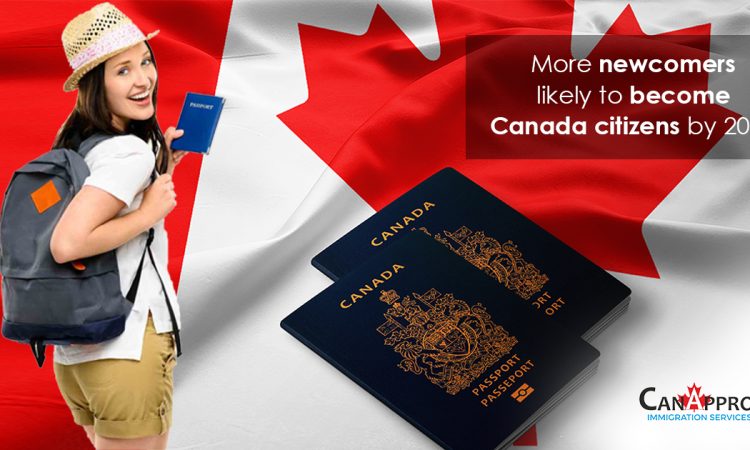
More newcomers likely to become Canada citizens by 2024

Canada government will be spending around $110 million in 2023-2024 for processing citizenship applications, as predicted by the campaign platform for the Liberal Party ahead of the general elections. This indicates a 40 percent increase compared to the amount Canada plans to spend for the same purpose over the coming fiscal year, which is around $75 million. The predicted amount for 2023-2024 period also indicates that the country would be accepting 40 percent more new citizens by   2024.

When a permanent resident acquires Canada citizenship, they get to enjoy a lot of exclusive privileges. These include the right to vote, to run for political office, to enjoy preferential treatment while applying to government jobs, to travel with a Canadian passport and to travel outside of Canada indefinitely.

Canada is keen about helping new immigrants to integrate well to the Canadian society and the country’s high rate of citizenship acquisition shows that it does a good job in facilitating integration. A study conducted by the Organisation for Economic Co-operation and Development (OECD) in 2018 showed that around 91 per cent of the immigrants who had lived in Canada for at least 10 years have held citizenship. While in Australia, the percentage was 81 percent and in the United States, it was 62 per cent.

A new study by Statistics Canada has found that the citizenship acquisition rate was 86 per cent in Canada at the time of 2016 Census compared to 82 per cent during 1991 Census. But the country had been witnessing a decline in naturalisation rates in the past few years, mainly owing to the citizenship policy changes made by Canada over the last decade. Canada introduced a new language requirements and a new citizenship exam in 2010, which had an impact on the number of new citizens. The increase in the citizenship application fee from $100 to $300 also affected the naturalisation rates.

But recently, the Canada government has introduced certain policy changes with an aim to improve the naturalisation rates. These include upgrading the economic class selection standards that resulted in more immigrants with a higher level of language proficiency arriving in the country. Similarly, the family class immigrants chosen for immigration have social-economic characteristics similar to Canadian citizens and permanent residents sponsoring them, which means they come with a higher human capital. All these make it easier for the new immigrants to integrate well to the Canadian society.

Further, Canada has brought down the language test and citizenship exam requirements for those belonging to the age group of 18-54. The Liberals had promised to waive the citizenship fees completely if they came to power, which they may implement soon.

Canada has a lot of opportunities in store for those who wish to move to the country permanently. If you too wish to enjoy a better life in Canada, the time is now for you to start your Canada migration journey. Take the first step by filling our free eligibility assessment form.